In the place of the prehistoric sanctuary and oracle of Gaea, one of the largest and most important sanctuaries of antiquity was founded in the valley of the river Alpheus.
Its creation dates back to the 10th century B.C.
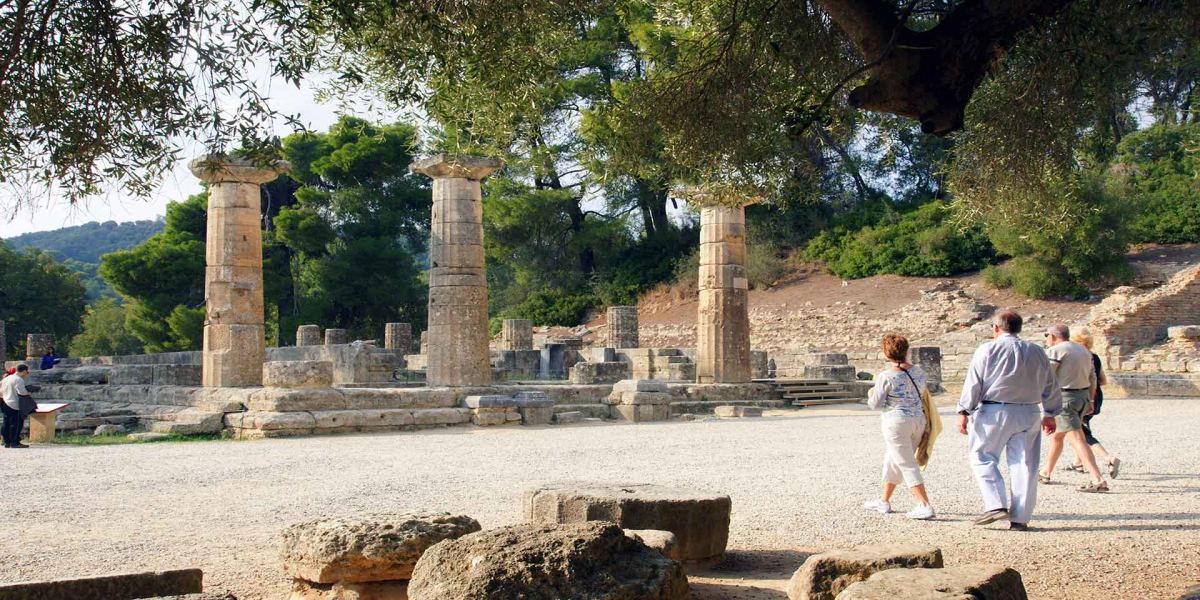
The great development of the sanctuary began in the Archaic era and its prosperity is placed in the classical era, when the majestic temple of Zeus was built (470-456 BC). The ruins of the huge temple of Zeus are impressive, where the ivory statue, created by Pheidias, was 12.4m high, as well as the well-preserved stage of the area, with the sanctuary of Hera. The Archaeological Museum of Olympia, one of the most important in Greece, hosts exhibits of inestimable value, including the famous statue of Hermes of Praxiteles. The first Olympic Games took place in the sanctuary of Ancient Olympia in 776 B.C, and the idea of sportsmanship was first developed. The education of the youth was based on physical and spiritual exercise, so that in this way they could approach divine perfection. The games were held every four years and all hostilities ceased for the duration so that everyone could participate. The last Olympic Games took place in 393 AD as the emperor of Byzantium, Theodosius I put an end to the tradition, considering the institution pagan. In 1896, the Athens Olympic Games marked the revival of the institution and since then they are held every four years, with the lighting of the flame being done on the altar of Hera and the torchlight being transferred to the respective country hosting the games.